Introduction
Choosing the right charcoal is one of the most important decisions for any hookah smoker. Whether you’re a casual user or a hookah lounge owner, the type of charcoal you use will directly affect your flavor, heat control, and overall experience.
In this article, we’ll compare the two most common types of hookah charcoal — coconut shell charcoal briquettes and traditional wood charcoal — to help you decide which one is best for your next session.
What Is Coconut Charcoal?
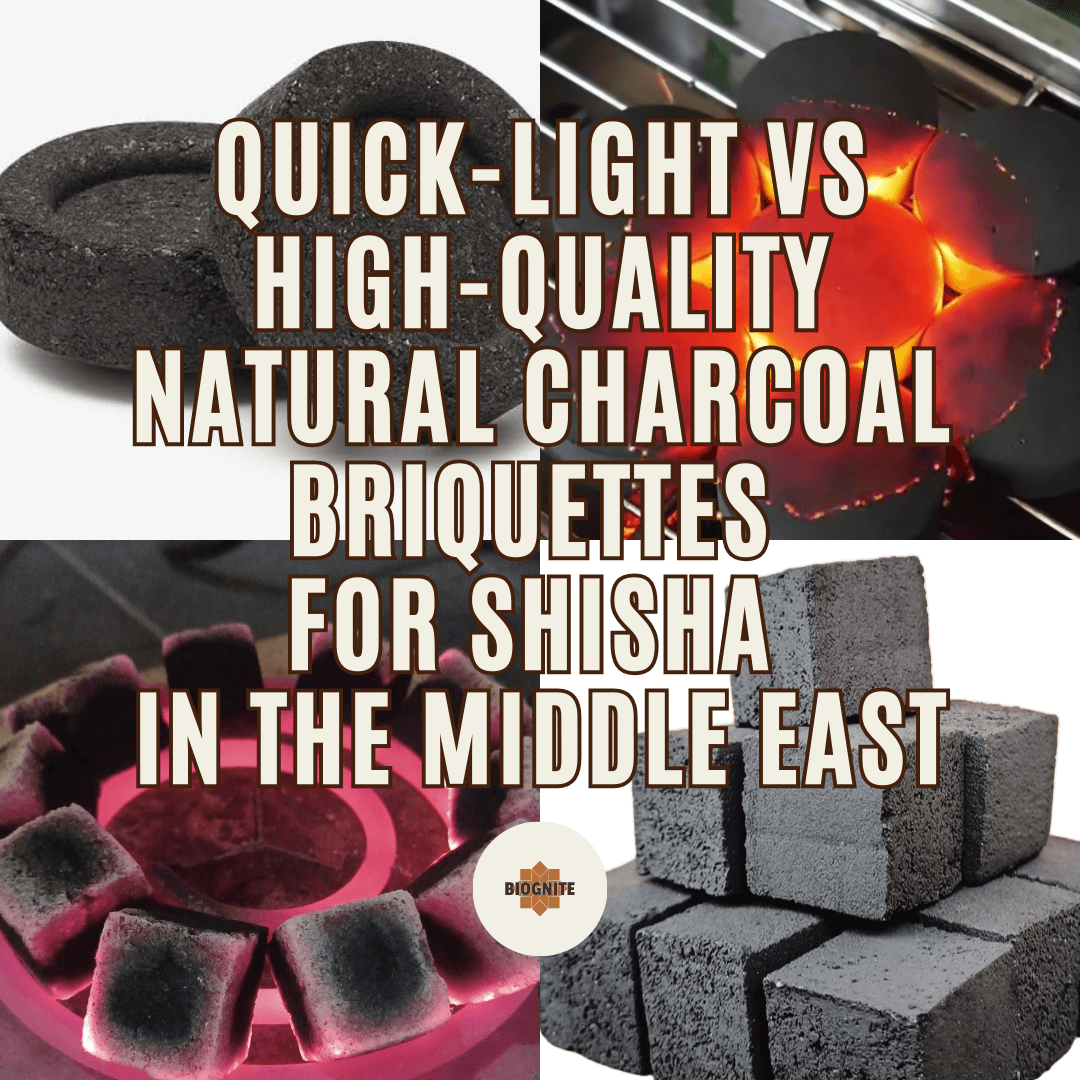
Coconut charcoal is made from compressed coconut shells. After the shells are carbonized in a controlled environment, they’re shaped into uniform briquettes. This eco-friendly, natural charcoal is highly popular for hookah because of its long burn time and clean performance.
Key Features:
- 100% natural and sustainable
- Low ash production
- Odorless and tasteless
- Long-lasting heat
What Is Wood Charcoal?
Wood charcoal is made by burning hardwood like mangrove, acacia, or fruit trees in kilns. It has been used for decades as a fuel source for hookah and barbecue. While widely available and inexpensive, it comes with several drawbacks when used for hookah.
Key Features:
- Faster ignition
- Higher ash production
- Often contains natural wood aroma
- Shorter burn time than coconut charcoal
Coconut Charcoal vs Wood Charcoal: A Head-to-Head Comparison
| Feature | Coconut Charcoal | Wood Charcoal |
| Burn Time | 60–90 minutes | 30–45 minutes |
| Ash Production | Less than 3% | 8–15% |
| Odor & Taste | Neutral, does not affect shisha | Can leave a smoky wood aroma |
| Heat Consistency | Stable, even heat | Uneven heat, may cause hot spots |
| Ignition Time | 5–10 minutes (with burner) | 3–5 minutes (with flame) |
| Eco-Friendliness | Made from waste coconut shells | Can contribute to deforestation |
| Price | Slightly higher | Cheaper |
Why Coconut Charcoal Is Better for Hookah
Here’s why experienced hookah smokers and premium lounges prefer coconut charcoal:
✅ Cleaner Smoke: No unwanted wood aroma or aftertaste
✅ Longer Sessions: Burn time up to 90 minutes
✅ Minimal Ash: Easier maintenance and better airflow
✅ Consistent Heat: Helps prevent burnt shisha
✅ Eco-Friendly: Sustainable and made from waste materials
While wood charcoal may be cheaper and faster to light, the drawbacks in terms of ash production, uneven heat, and flavor interference often outweigh the convenience.
Is There Any Reason to Use Wood Charcoal?
For outdoor BBQs or rustic-style shisha setups where natural wood smoke is desired, wood charcoal can offer a unique experience. However, for controlled, clean, and consistent hookah sessions — especially indoors or in commercial lounges — coconut charcoal remains the superior choice.
Conclusion
If you care about flavor purity, heat consistency, and sustainability, coconut shell charcoal is the clear winner for hookah use. It offers a longer-lasting, cleaner, and healthier smoking experience compared to traditional wood charcoal.
Looking for high-quality coconut charcoal for your hookah business? Contact Biognite today for premium export-grade coconut shell briquettes.
👉 Also read another coconut charcoal vs wood charcoal article: Why Coconut Charcoal Is the Best Hookah Charcoal for Shisha Lovers in 2025
FAQ
Is coconut charcoal healthier than wood charcoal for hookah?
Yes. It produces less ash, contains no chemical additives, and doesn’t leave any unwanted taste or odor.
Does coconut charcoal last longer than wood charcoal?
Coconut charcoal burns for 60 to 90 minutes, nearly twice as long as most wood charcoal.
Can you use wood charcoal for hookah?
Technically yes, but it produces more ash, heats unevenly, and may alter the shisha flavor with a smoky aroma.